Sponsored by  Ontop
Editor's note: This piece is presented in partnership with Ontop.
InsightsNovember 2, 2026, 9 min read
The New Economics of Technical Talent
The fundamental question facing technology leaders today is no longer just how to hire, but how to architect capability. As AI expands individual capacity and global networks democratize access to specialized expertise, the traditional playbook for team design is broken. The harder question is deciding which knowledge, judgment, and accountability your company actually needs to own.
By GILD
A technology leader needs a capability the company does not have today.
Maybe it is model evaluation, a security assessment, or a specialized infrastructure migration. The conventional answer used to be straightforward: if the work matters, hire someone who can own it.
Now the decision has more variables.
AI may increase the capacity of the existing team. The right specialist may sit in another country. The expertise may be essential for six months and unnecessary two years from now.
Technology leaders have more ways to access capability than ever: permanent employees, employees in other countries, contractors, specialist firms, vendors, AI systems, or some combination of them. But access to expertise is not the same as owning the knowledge, judgment, and accountability behind it.
It is worth being precise about what is and is not changing. Technology is not becoming a contractor-based industry. In the U.S. Bureau of Labor Statistics’ most recent Contingent Worker Supplement, from July 2023, 93.8% of workers in computer and mathematical occupations were in traditional employment arrangements. Just 3% were independent contractors.
Those numbers are a useful corrective to the idea that technical work is quietly turning into freelance work. The more interesting shift is happening one level up: companies are becoming more deliberate about how they assemble capabilities, and about which parts they need to own internally.
AI changes capacity, not the ownership question
There is credible evidence that AI can materially increase developer output. There is much less evidence that it produces a predictable reduction in headcount.
The largest field evidence so far comes from three randomized experiments at Microsoft, Accenture, and an anonymous Fortune 100 company, covering 4,867 software developers. Developers who were given an AI coding assistant completed 26.08% more tasks in the pooled analysis. The gains were concentrated among less experienced developers, who also adopted the tool at higher rates.
A smaller but carefully designed study points the other way. METR ran a randomized trial with 16 experienced open-source developers working on 246 real tasks in repositories they already knew well. With early-2025 AI tools, they took 19% longer. Before the study, they expected AI to make them 24% faster, and afterward they still believed it had.
That contrast is more useful than either number alone.

AI leverage depends on the task, the developer, the tool, and the system around it. Faster generation can also move the constraint somewhere else: from writing code to reviewing it, testing it, and deciding whether it belongs in the architecture at all.
Google’s 2025 DORA report on AI-assisted software development captures that tension. AI use is now close to universal among the technology professionals it surveyed, yet 30% said they trust AI-generated output only a little or not at all, more than the 24% who trust it a lot or a great deal.
For technology leaders, that makes a simple “AI means fewer engineers” model unhelpful.
The better question is what AI changes about the capability the organization needs. If implementation becomes faster, does the company need less capacity, more output, or more senior judgment around what is being produced?
AI changes how much a team can produce. Global talent changes where the expertise behind that work can come from. Together, they give technology leaders a much wider set of options for assembling capabilities, and a much harder set of choices.
The real boundary is ownership
This is where the employee-versus-contractor debate becomes too simplistic.
A company can access expertise externally while retaining strong internal ownership. The real issue is whether the work creates knowledge, judgment, or accountability that should remain inside the organization.
Architecture, product judgment, security context, and operating history usually do. They shape future decisions, and they are difficult to reconstruct once the people who hold them have left.
That means “core versus non-core” cannot be decided by technology category alone. A payments company may need deep internal ownership of its ledger architecture while using an external specialist for a Kubernetes migration. Another company could reasonably draw the line somewhere else.
When a capability is strategically important and durable, internal ownership should be strong. When the work is specialized, bounded, testable, or temporary, contractors and external specialists can give companies access to expertise without adding permanent headcount.
Six months after the specialist leaves, who inside the company understands what was built, why the decisions were made, and how to change it?
A useful test: six months after the specialist leaves, who inside the company understands what was built, why the decisions were made, and how to change it?
If the answer is nobody, the organization has not simply accessed expertise. It has externalized ownership.
Four questions for drawing the line
In practice, most leaders do not need a new org chart to make this decision. They need a consistent way to ask the same questions every time a capability gap appears.
Durability. Will the company still need this capability in two years, or is it tied to a migration, a launch, or an audit with an end date?
Compounding knowledge. Does doing the work teach the organization something that improves future decisions about its architecture, its customers, or its risk?
Accountability. If this goes wrong, who answers for it to customers, regulators, or the board? Accountability that cannot be outsourced usually needs ownership close to it.
Verifiability. Can the output be specified, tested, and accepted against clear criteria? Bounded, testable work is where external specialists, and increasingly AI tools, tend to perform best.
A capability that scores high on durability, compounding knowledge, and accountability belongs inside. One that is temporary, specialized, and easy to verify is a strong candidate to access instead.
Most real decisions land somewhere in between, which is why the answer is so often a hybrid. Consider a hypothetical mid-size software company preparing for its first SOC 2 audit. It brings in a compliance specialist for four months, but names an internal engineer as the owner, who pairs on every control and documents every decision. When the engagement ends, the expertise leaves. The knowledge does not.
Global talent expands the option set
The same distinction applies to geography.
Global and external are not synonyms.
A company can employ someone permanently in another country, engage an independent specialist abroad, or work through a staffing or services provider. Technology leaders are therefore making two separate decisions: where the expertise should come from, and what relationship the company should have with the person providing it.
Cross-border digital work is already substantial. An International Labour Organization survey published in 2025 of 1,153 web-based platform workers across 21 Latin American and Caribbean countries found that 53% work for clients outside their own country. Among those who know where their clients are, 90% said they are based outside the region, mainly in the United States and Canada.
The same survey describes a young, highly educated workforce: a median age of 33, with more than half holding a university degree.
The advantage for companies is clear. They are no longer limited to the expertise available in a single hiring market.
But access to global talent only creates useful flexibility when companies have the infrastructure to engage and manage that talent well.
Global workforce infrastructure becomes a delivery problem
Once a team crosses borders, sourcing the person is only one part of the problem.
Worker classification, contracts, IP protection, identity and access, tax requirements, payments, currency conversion, and offboarding all become part of making the relationship work.
“Hiring and paying global talent is very fragmented. Companies have to juggle dozens of tools for contracts, for compliance, and for payment.”Julián Torres, co-founder of Ontop, speaking to Refresh Miami
Flexibility at the talent layer depends on infrastructure that can support it. Access to global talent only becomes useful when companies can contract, onboard, pay, and manage people across borders reliably.
Classification deserves particular attention, because contractual language alone does not determine whether someone is genuinely independent. As the IRS explains for U.S. workers, the actual working relationship matters, and rules differ again in every jurisdiction where a company engages people.
Payments add another layer. The issue is not simply whether international workers have access to banking: the World Bank’s Global Findex 2025 indicates that roughly seven in ten adults in Latin America and the Caribbean had an account in 2024.
The harder problems increasingly sit between systems: cross-border compliance, settlement, FX, fees, and making professional income predictable across countries. Platforms built specifically for this layer, like Ontop, show that automating compliant cross-border contracts and offering localized global accounts can turn this administrative friction into a competitive hiring speed advantage.
Speed is a large part of it. Torres has described how a wire from the U.S. to Argentina “could take anywhere from six to twenty days,” and says Ontop now settles transactions worldwide in less than fifteen minutes.
For organizations that depend on distributed talent, these are not administrative details. If onboarding delays a critical specialist, payments disrupt an engagement, or classification issues force the relationship to change, workforce infrastructure becomes a delivery problem.
AI can expand capacity. Global talent can expand access. Workforce infrastructure is what allows companies to turn both into a reliable operating model.
A better workforce question
“Should we hire contractors?” is too broad a question.
A better starting point is: what does the company actually need to own?
Which knowledge should compound internally? Where does permanent accountability matter? And where can specialized or flexible expertise create more value than permanent capacity?

The evidence points less toward replacing employees with contractors than toward companies becoming more deliberate about the mix of permanent teams, external specialists, global talent, and AI.
The advantage will not come from maximizing one model. It will come from knowing what the company needs to own, what it can access when needed, and having the infrastructure to make the two work together.
What to take back to your team
Separate the two decisions. Where expertise comes from and what relationship the company has with it are different questions, and they deserve different answers.
Name an internal owner for every external engagement. Specialists can do the work. Someone inside needs to understand it, review it, and be able to change it later.
Measure AI by the constraint it moves, not the code it writes. If review, testing, or architecture becomes the bottleneck, that is where judgment and headcount should go.
Treat workforce infrastructure as part of delivery. Contracts, classification, and payments decide how quickly global talent can actually contribute.
Presented by Ontop
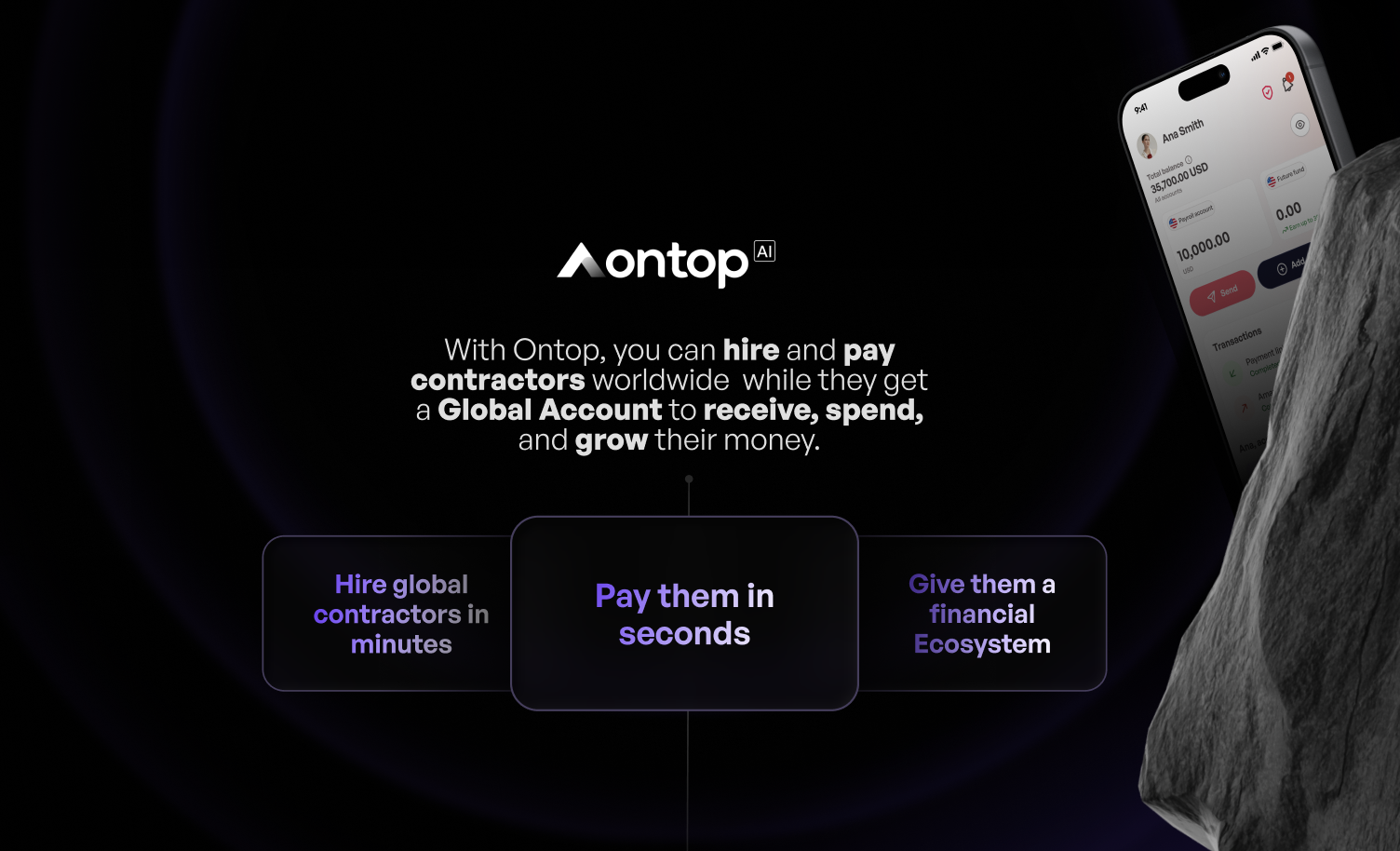
Ontop sits where HR tech meets fintech. For companies, it provides the legal and compliance infrastructure to hire and pay workers in more than 150 countries. For workers, it provides a Global Account and a financial hub to receive, move, spend, and grow their earnings, including payments in U.S. dollars.
GILD, November 2, 2026